
In modern plant engineering, drinking water installations are subject to the highest hygienic and regulatory requirements. The focus is on the German Drinking Water Ordinance (TrinkwV), protection against microbiological growth, and the long-term maintenance of water quality. A plastic drinking water pipe must reliably meet these requirements from the property connection to the final tap.
In many hot and cold water installations, plastic pipes made of polypropylene random copolymer (PP-R) have become the standard. The material is suitable for hygienically sensitive drinking water applications, avoids material-related corrosion risks and supports the safe, durable and cost-effective design of drinking water installations.
Plastic pipes for potable water in a wide range of applications
Drinking water pipework forms part of the central technical infrastructure in almost every type of building. It supplies outlets in flats, sanitary areas, kitchens, care areas, plant rooms or commercially used spaces. Depending on the use, outlet profiles, hot and cold water requirements, as well as the demands on availability, load-bearing capacity and user comfort vary.
- Residential buildings and blocks of flats: In detached houses and blocks of flats, plastic pipes for drinking water are primarily used to supply bathrooms, kitchens, utility rooms and central distribution pipes. They are suitable for new builds as well as for modernisation projects and individual pipe sections in existing buildings.
- Hotels and accommodation providers: In hotels, guesthouses and holiday resorts, drinking water pipework must reliably supply numerous outlets – from guest rooms and kitchens to wellness and sanitary areas. Plastic pipework systems can support both centralised and decentralised drinking water supply concepts here, for instance in cases of fluctuating occupancy and widely varying usage times.
- Healthcare and care facilities: Hospitals, care homes and buildings used for medical purposes place particularly high demands on a reliable supply of cold and hot drinking water. Plastic pipes are used here in patient rooms, care areas, functional rooms and sanitary facilities, amongst other places.
- Commercial, administrative and public buildings: In office buildings, schools, sports facilities, administrative buildings and public institutions, plastic drinking water pipes are used in areas with varying levels of footfall. These include sanitary facilities, kitchenettes, technical areas and central supply systems.
- Industrial and production facilities: In industrial buildings, pipework systems ensure the supply to staff, staff facilities, laboratory areas or ancillary technical areas. Depending on the building, robust plastic pipework systems can also be integrated into larger building networks and the operational infrastructure.
Outdoor areas and special applications: Depending on requirements, a plastic drinking water pipe may also be relevant outside the building. This includes, for example, underground drinking water pipes, supply lines to parts of buildings, outdoor facilities or the supply of larger estates.
For operators, specialist planners and contractors, this wide range of applications is particularly relevant when buildings are altered, extended or modernised in sections over their lifecycle. In this way, the drinking water supply can be adapted to different usage and supply concepts.
Requirements for drinking water pipe systems
The planning and installation of drinking water networks is subject to legal, hygienic and operational requirements. Pipe systems for drinking water must be suitable for contact with cold and hot drinking water, minimise liability risks and function reliably for many years. Crucial factors are hygienic suitability, operational safety, cost-effective installation and standard-compliant use within the building.
Hygienic suitability and standard-compliant contact with drinking water
Compliance with the country-specific requirements is mandatory for all drinking water installations. Plastic pipes for drinking water must be designed in such a way that they do not adversely affect the odour, taste or quality of the water.
Suitable PP-R materials are free from heavy metals. They prevent material-related contamination, which must be tested in metallic materials depending on water quality and operating conditions.
Temperature control and protection against unwanted heat transfer
For safe operation, cold water pipes must remain cold and hot water pipes sufficiently warm. Installation shafts in which pipes with different temperatures run close together are particularly critical.
PP pipe systems for drinking water have low thermal conductivity and can therefore support proper insulation. This reduces unwanted heat transfer between pipe runs without compromising the requirements for insulation, pipe spacing and proper installation.
Corrosion resistance and permanently clear pipe cross-sections
Fluctuating water quality, low pH levels or high water hardness can promote corrosion, pitting or deposits in metallic pipe materials. A plastic drinking water pipe is corrosion-resistant and requires no additional corrosion protection.
Smooth internal surfaces prevent deposits from adhering and help maintain a clear pipe cross-section in the long term. This supports consistent flow conditions and reduces operational risks in the pipework network.
Hydraulic efficiency and safe use within buildings
A stable flow rate and low pressure losses are key requirements for the cost-effective operation of drinking water networks. The low surface roughness of plastic pipes can reduce flow resistance and support the hydraulic design.
In combination with suitable fittings, drinking water piping systems can be designed to minimise dead spaces and reduce stagnation zones. This is particularly relevant in buildings with varying usage patterns and tap points with differing levels of use.
Sound insulation, pressure resistance and long-term operational reliability
Flow noise is an important quality criterion, particularly in residential construction, hotels and sensitive areas of use. Thanks to the damping properties of polypropylene, PP-R pipework for drinking water can reduce the transmission of structure-borne noise compared to metallic pipework systems.
At the same time, pipework systems must withstand sustained network pressure, temporary pressure surges and planned disinfection measures. The material-related flexibility of a plastic drinking water installation can help absorb pressure peaks and ensure the mechanical stability of the network.


Planning and installing drinking water pipework systems safely
The professional design and installation of a drinking water system determine whether the installation performs as calculated and remains reliable in actual building operation. In addition to flow rates and pipe dimensions, the installation layout, interfaces with other building services, and future changes in use must also be taken into account.
- Pipe routing and connection points: Drinking water pipes must reliably supply risers, floor distribution systems, individual connections and central distribution points. Space constraints, usage units and future accessibility within the building must be taken into account.
- Installation and connection technology: Plastic pipes for drinking water installations can be joined using heat fusion to create a material-to-material bond. In this process, the pipe and fitting are joined using the same material, resulting in permanently leak-proof connections without the need for mechanical sealing elements.
- Installation procedures and prefabrication: Low pipe weight, ease of handling and precisely fitting assemblies can simplify installation in new builds and larger technical centres. Prefabricated manifolds or pipe assemblies reduce the workload on site and support clearly structured construction processes.
- Renovation and existing buildings: When modernising existing drinking water networks, consideration must be given to confined shafts, existing pipe routes and work carried out in sections whilst the building remains in operation. A plastic drinking water installation can be flexibly integrated into existing structures, mixed installations and extensions.
- Temperature-induced linear expansion: For hot water and circulation pipes, the thermal linear expansion of the pipe material must be taken into account in terms of fixing, pipe routing and space requirements. Multilayer or fibre-reinforced plastic pipes can reduce linear expansion compared to single-layer pipe variants.
- Fire protection and building interfaces: Where pipes pass through ceilings and walls, building regulations regarding fire compartments must be complied with. Tested fire-sealing solutions and clear installation guidelines facilitate the safe integration of drinking water piping systems into fire-critical areas of a building.
Reliable planning is demonstrated above all by feasibility: pipework must remain installable, testable, accessible and maintainable in the future. The more clearly these points are taken into account prior to installation, the easier it is to avoid rework and manage interfaces between planning, installation and operation.
Technical properties of plastic pipes for drinking water
For use in drinking water installations, technical properties that combine material behaviour, processing and system integration are key. It is crucial that the pipework withstands the demands of ongoing operation whilst also being cost-effective to install.
A PP pipe for drinking water combines material stability with good handling and smooth inner surfaces for consistent flow conditions in the pipework network. Its low weight facilitates transport and installation and supports efficient processing on site. This allows plastic drinking water pipes to be cost-effectively installed in various hot and cold water systems.
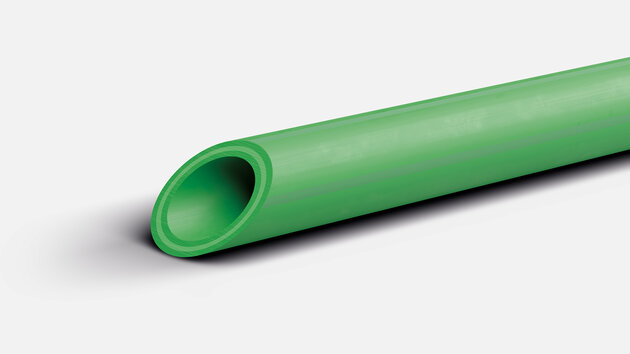
aquatherm green combines these properties in a coordinated plastic pipe system for drinking water: from pipes and fittings through connection technology to system-compatible transitions. This transforms the general requirements for plastic pipes set out in the ‘ ’ into a concrete system solution for demanding drinking water installations.



Frequently asked questions about plastic pipes for drinking water
Plastic drinking water pipes can be used in many types of buildings and applications – from residential construction and hotels to public and commercial buildings. They support safe and cost-effective installation, are corrosion-resistant and are easy to work with.
Compared to metallic pipe materials such as copper or steel, there is no material-related risk of corrosion. This makes plastic pipes for drinking water a sensible choice when durability, consistent water quality and easy installation are important.
Pipe systems for drinking water must be suitable for contact with cold and hot drinking water and meet high standards of hygiene, safety and durability. They must not adversely affect the smell, taste or quality of the drinking water.
They must also be suitable for use in accordance with standards and withstand the stresses of ongoing building operations. These include, among other things, pressure loads, temperature fluctuations, appropriate disinfection measures and consistently reliable performance within the pipework network.
Plastic pipes for drinking water are corrosion-resistant, lightweight and easy to work with. Their smooth inner surfaces promote stable flow conditions and help to reduce deposits within the pipe cross-section.
For drinking water installations using plastic, the connection technology, suitability for hot and cold water, and the coordination of system components are also important. This allows different supply areas within the building to be reliably implemented.
Yes, plastic pipes for drinking water can also be used in refurbishments, modernisations and phased renovations of existing buildings. They can be integrated into existing structures and, with appropriate design, can also form part of a mixed installation.
In existing buildings, low weight, good workability and flexible installation options are advantageous. It is crucial that the pipe system in question is suitable for the planned drinking water installation and is installed correctly.
Plastic pipes for drinking water are corrosion-resistant, lightweight and easy to work with. Their smooth inner surfaces promote stable flow conditions and help to reduce deposits within the pipe cross-section.
For drinking water installations using plastic, the connection technology, suitability for hot and cold water, and the coordination of system components are also important. This allows different supply areas within the building to be reliably implemented.
Yes, depending on the system design and approval, plastic pipes can be used both inside buildings and for underground drinking water pipes. This may be relevant, for example, for supply pipes, outdoor installations or the supply of larger properties.
For an underground drinking water pipe, the installation situation, pressure load, ground conditions and applicable technical requirements must be taken into account. It is therefore always crucial that the pipe system used is intended for this application.