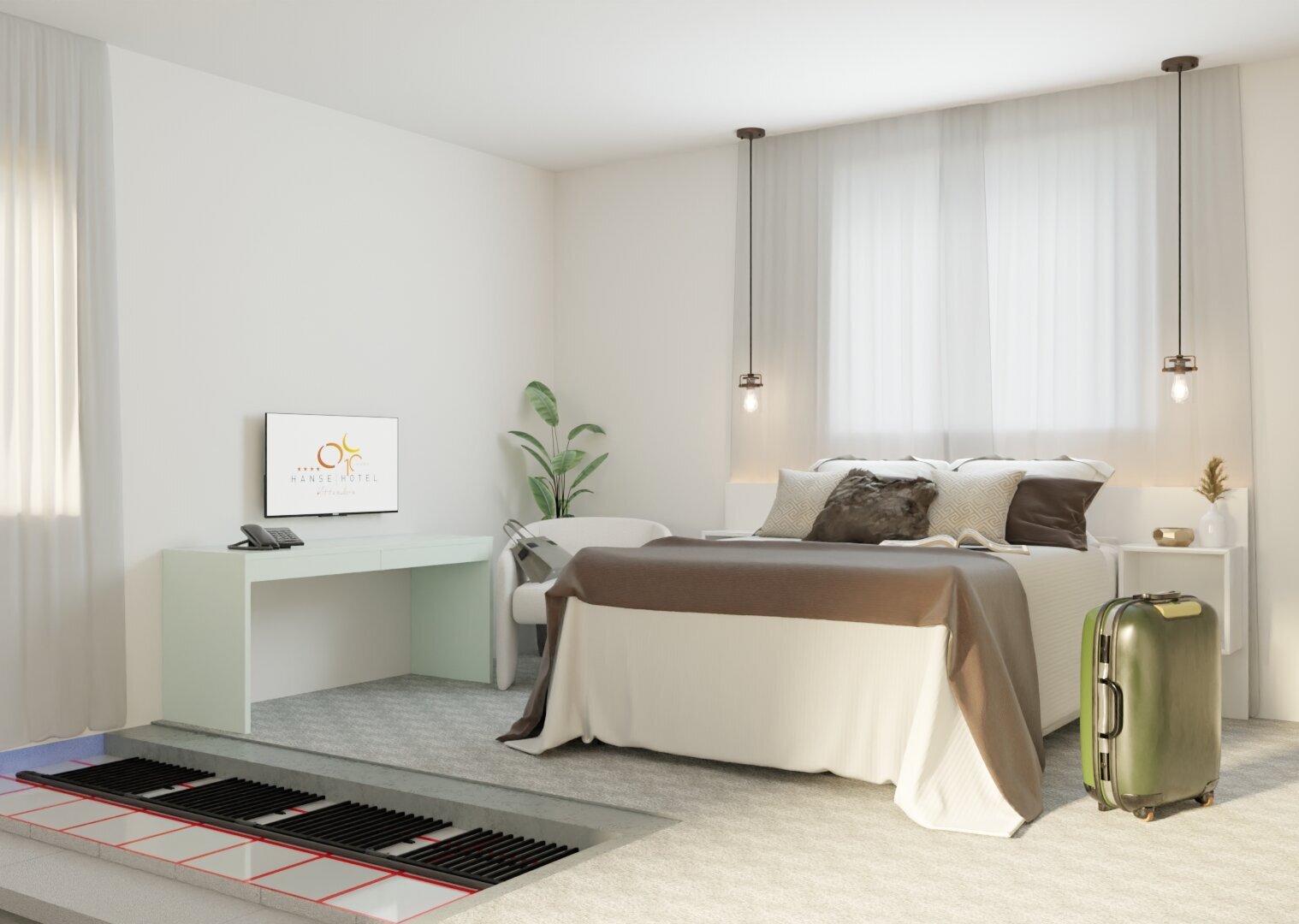
The heating and cooling coils are integrated into ceiling, wall or floor structures and circulated with heating or cooling water. Heat or cooling is emitted evenly across the entire active surface. Surface temperature control systems operate with small temperature differentials: in heating mode, flow temperatures are significantly lower than those of conventional systems; in cooling mode, they remain above the dew point.
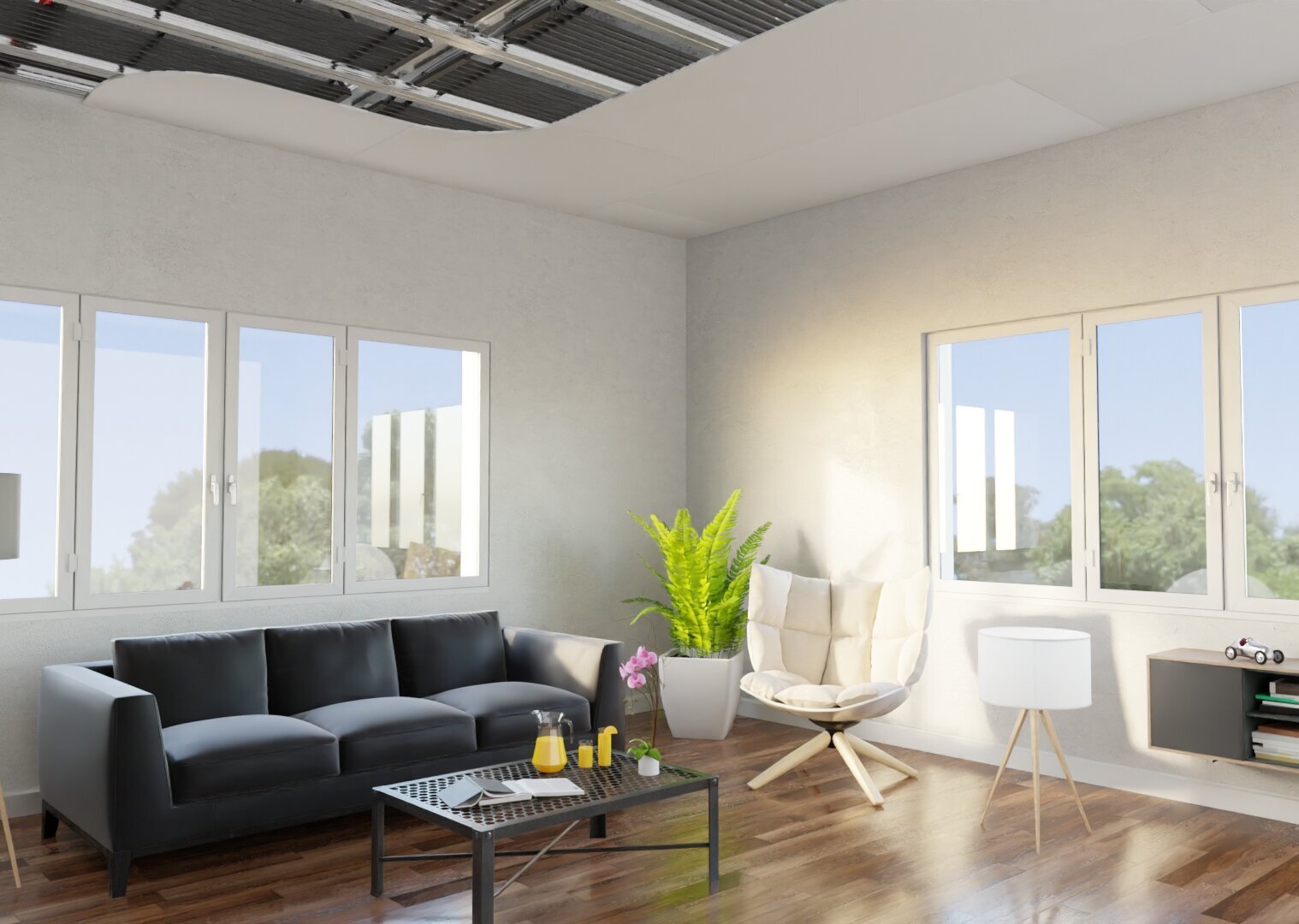
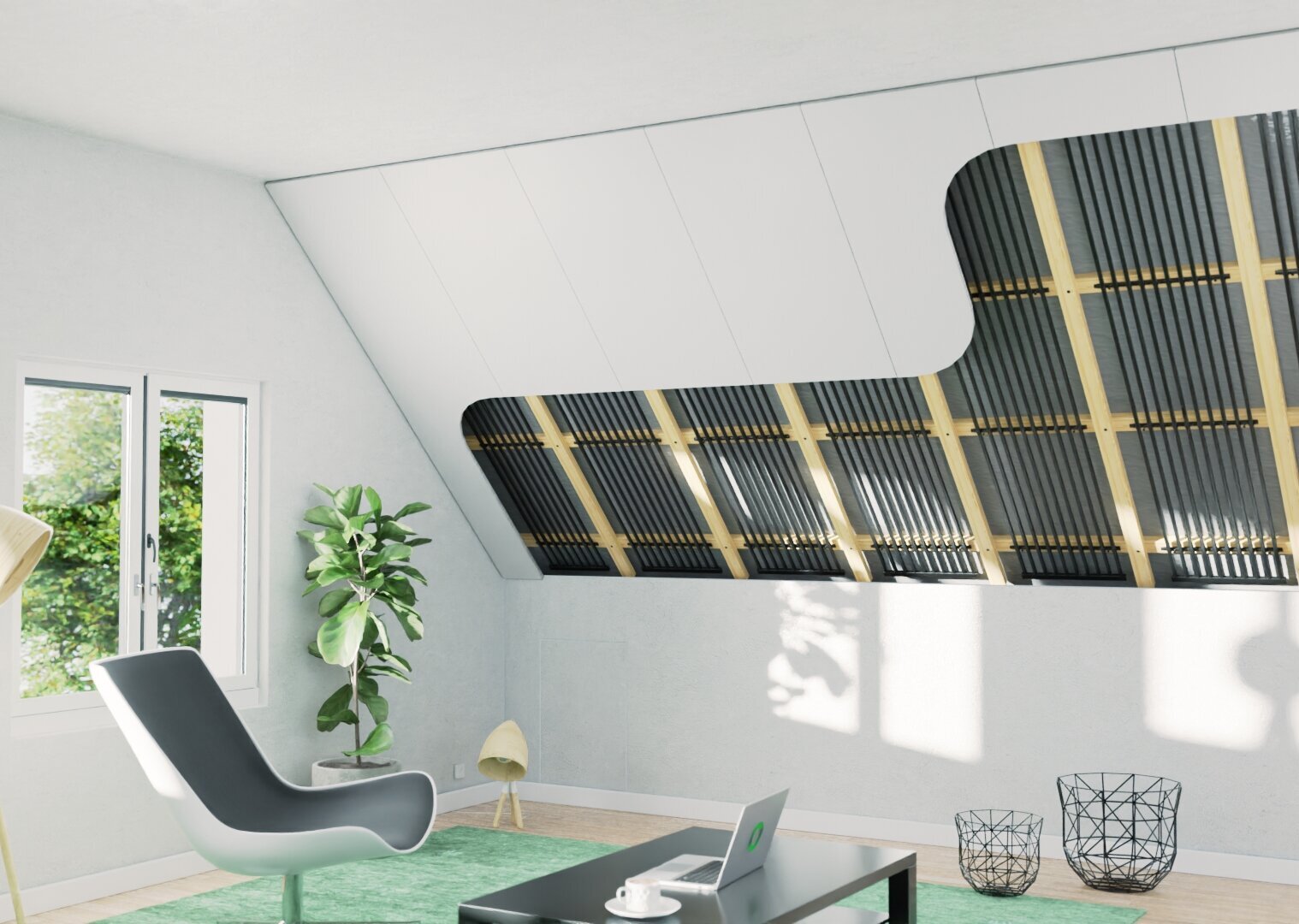
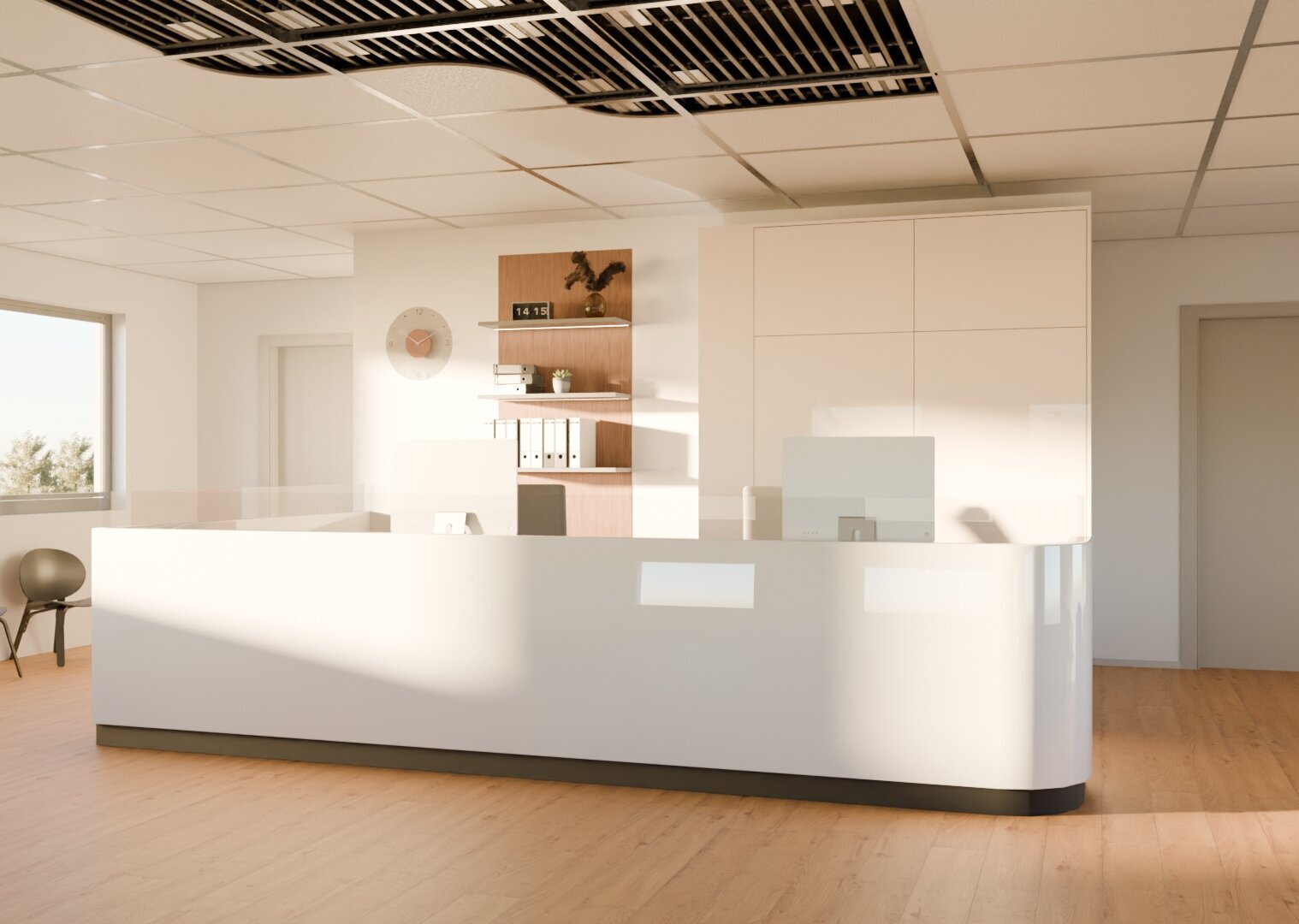
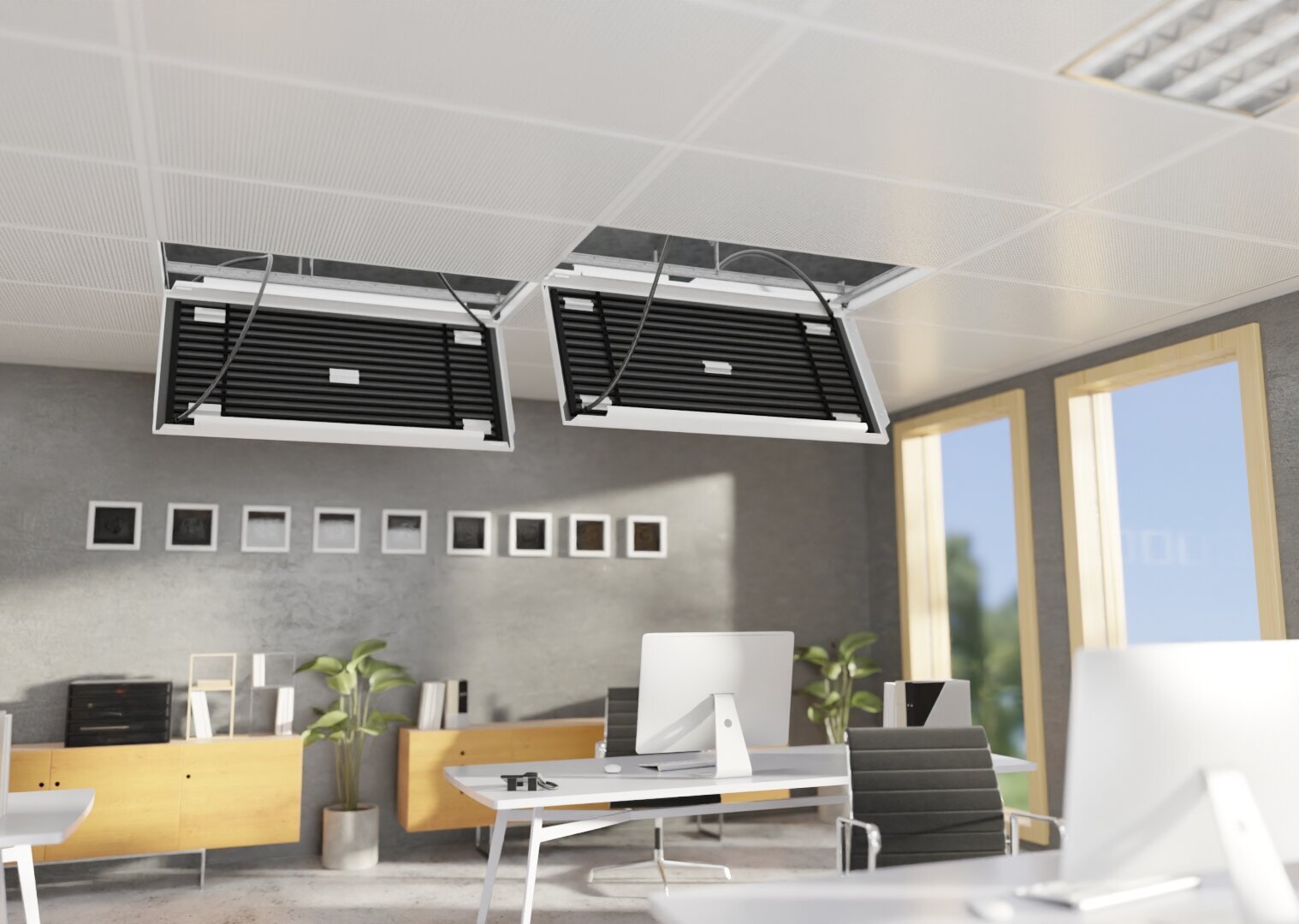
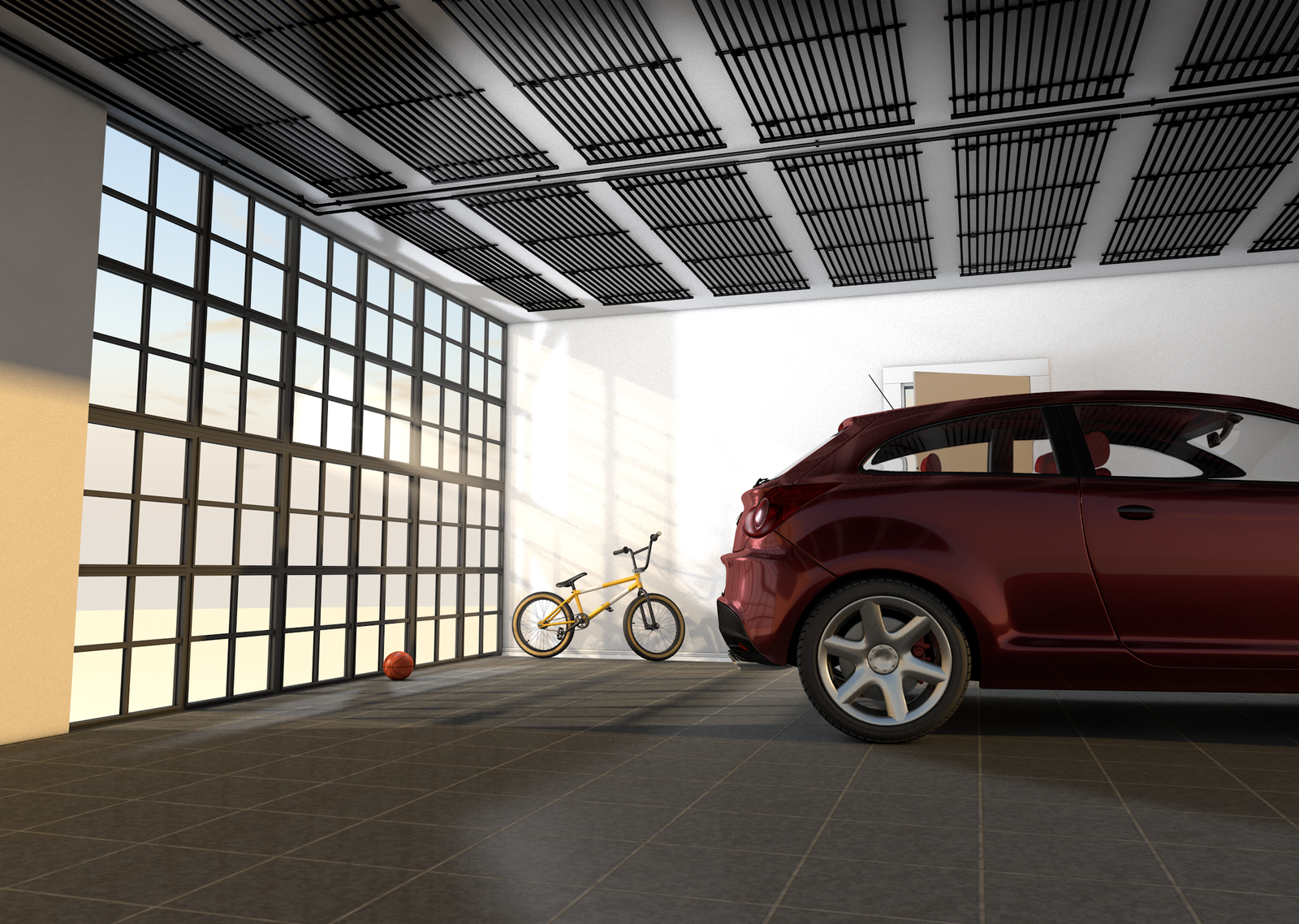
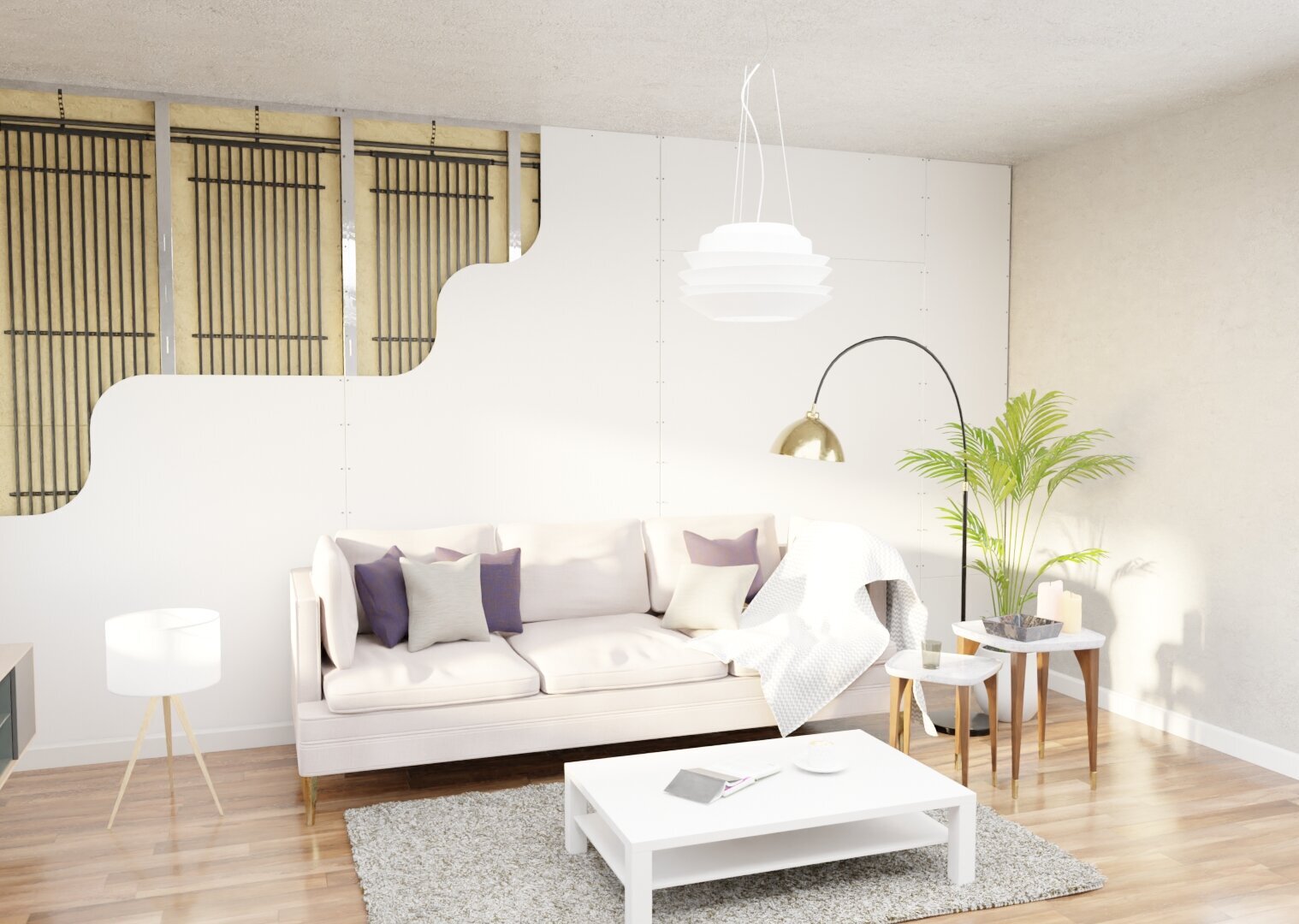
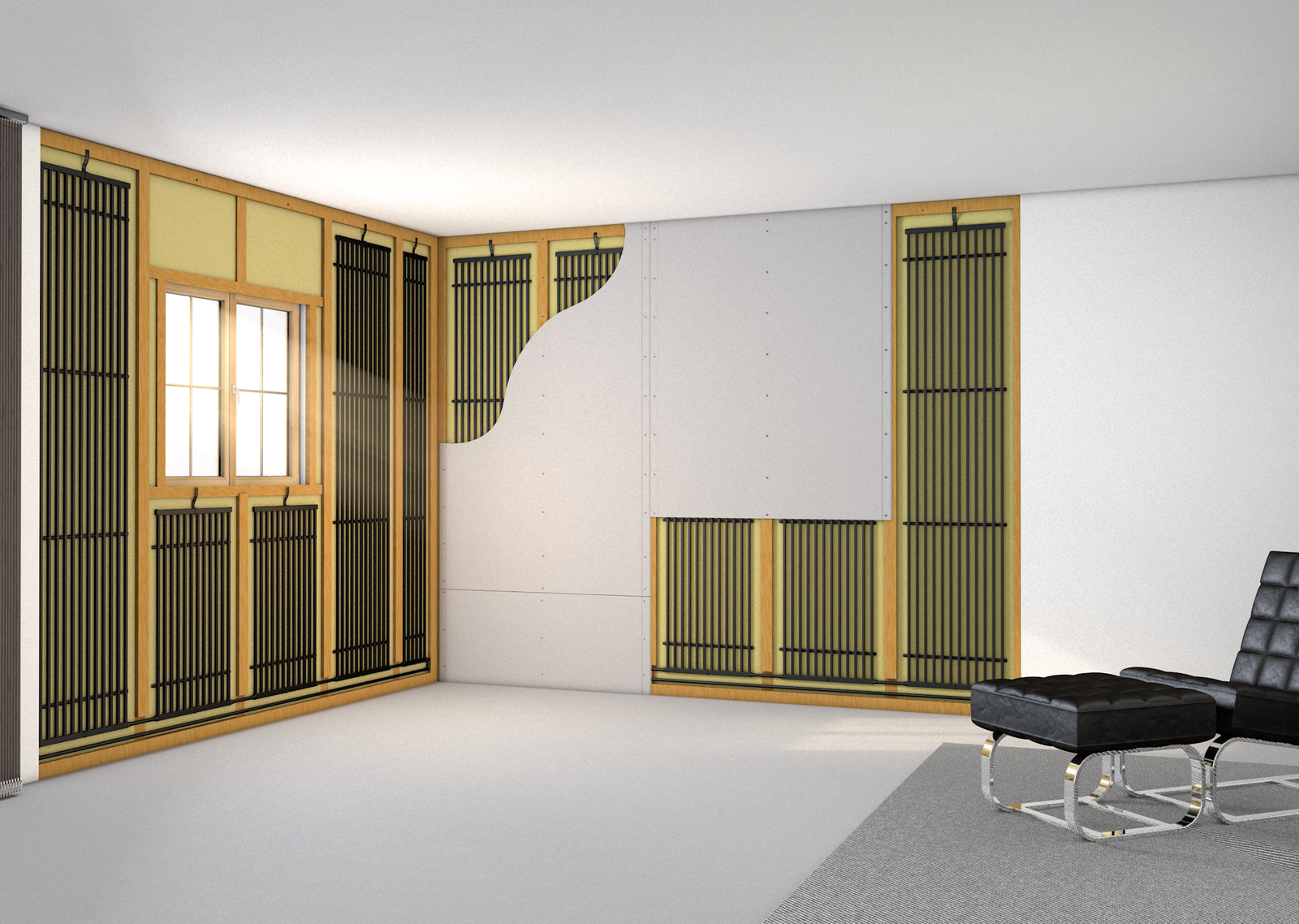
aquatherm black can be integrated into drywall and plastered constructions. The system is suitable for suspended heating and cooling ceilings with plasterboard or mineral fibre boards, metal cassette systems and screed installations. Thermally activated ceiling sails are available for specific design and acoustic requirements.
Thanks to the minimal installation height of 24.5 mm and narrow pipe spacing of approximately 4 cm, this surface heating and cooling system for ceilings, walls and floors is particularly suitable for confined installation situations in existing buildings.
AQUATHERM BLACK: The advantages of heating and cooling ceilings
The system combines high thermal comfort with flexible application options in both new and existing buildings, as well as discreet integration into the room’s architecture. As such, aquatherm black offers a high-performance alternative to conventional heating and cooling solutions.
Pleasant indoor climate
Surface temperature control ensures uniform heat and cool distribution throughout the room, without draughts or significant air movement or dust disturbance. By eliminating moving components in the heating and cooling registers, the system operates with very low noise emissions.
Benefits for planning and installation
The modular system design of aquatherm black supports efficient planning and rapid installation. The ceiling, wall and floor coils can also be installed in existing buildings and, in some cases, while the building remains in use. This makes the system particularly suitable for renovation and refurbishment projects with limited space.
Architectural integration and technical flexibility
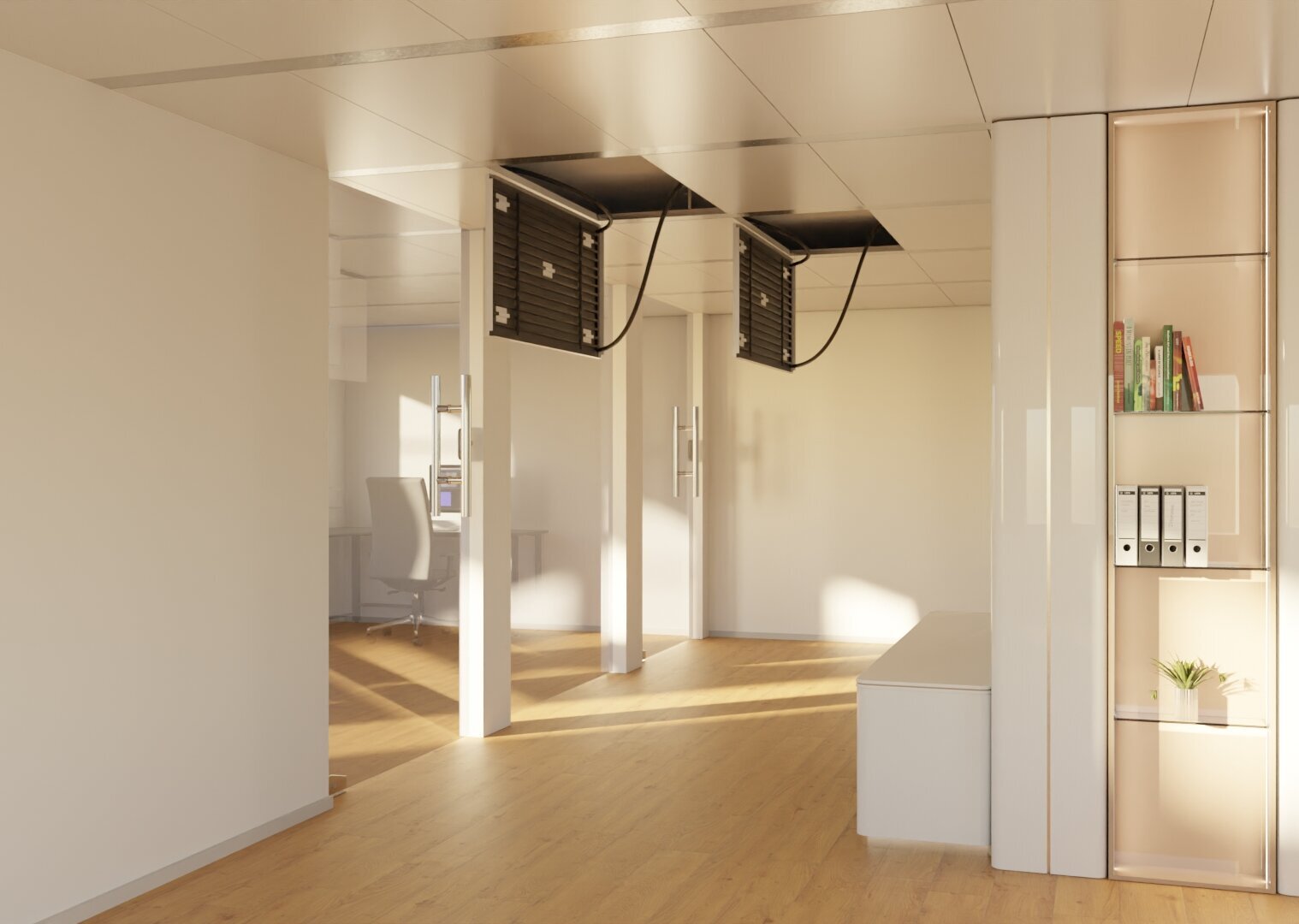
Once installed, the system remains completely invisible – whether in plaster, drywall, metal cassette systems or suspended ceiling systems. Thermally activated ceiling sails are also available for specific architectural requirements. This allows for a high degree of design freedom and flexible application of aquatherm black, from residential construction to commercial properties.
ADVANTAGES AT A GLANCE


Heating and cooling grids for ceilings, walls, and floors
aquatherm black is available in various system variants, tailored to different construction methods and installation scenarios. The choice depends in particular on the type of substructure and the intended surface finish. It is also crucial whether the heating and cooling coil is to be plastered in, clad or integrated into a suspended structure.

How heating and cooling grids work using the radiant principle
Conventional heating and cooling systems operate predominantly by convection: a radiator, fan coil unit, or air outlet mainly heats or cools the air in the room, which then circulates and regulates the room temperature.
In contrast, surface-integrated systems such as aquatherm black are based primarily on the radiant principle: the panels transfer heat or cold via the activated surface to the surrounding room surfaces and people. The room air does not serve as the primary transfer medium, meaning that air velocities and temperature differences in the room remain low.
In particular, the aquatherm black ceiling heating and cooling panels achieve a high proportion of radiant heat and thereby help to meet common thermal comfort criteria in accordance with EN ISO 7730 and EN 16798-1 (e.g. regarding operative temperature, PMV/PPD). This allows a comfortable indoor climate to be achieved at moderate air temperatures and with minimal air movement.Conventional heating and cooling systems operate primarily by convection: a radiator, fan coil unit, or air outlet mainly heats or cools the air in the room, which then circulates and regulates the room temperature.
AQUATHERM BLACK: The advantages of radiant heat
With thermal radiation, energy is transferred directly to people and room surfaces. As lower air temperatures are sufficient to achieve the same perceived comfort, the heating energy requirement is reduced. At the same time, heat losses through the building envelope are reduced.
Radiant heat promotes an even temperature distribution in the occupied zone. In systems that operate predominantly by convection, heated air typically rises towards the ceiling, while the lower part of the room remains cooler. This vertical temperature gradient is significantly reduced in surface systems, as ceiling, wall and underfloor heating panels have a high proportion of radiant heat and a large active surface area.
As radiant systems operate without significant air currents, dust particles and allergens are significantly less likely to be stirred up and distributed throughout the room. Draughts are reduced and the indoor air dries out less, as no strong air circulation or intensive air exchange via fans is required. This is particularly beneficial for people with allergies or respiratory conditions.
Radiant systems do not require fans or blowers and therefore do not generate any airflow-related noise. Compared to convective systems with forced air circulation, they operate with very low noise emissions and thereby contribute to quiet room acoustics.
Integrating the system into the floor, wall or ceiling allows for a completely concealed installation. This keeps surfaces free of visible heating or cooling units, giving architects and interior designers additional creative freedom when it comes to room layout, furnishing and surface design.
AQUATHERM BLACK: Technical features of the heating and cooling grids
aquatherm black grids are available in four connection types:
- Single-sided connection (ESA) – supply and return on the same side; suitable for installation scenarios with a single-sided manifold connection
- Double-sided connection (ZSA) – supply and return on opposite sides; frequently used for larger areas
- Single-sided connection with branch pipe (ESA-S) – As for ESA, but with an additional branch pipe for flexible connection of further grids
Double-sided connection with branch pipe (ZSA-S) – As for ZSA, but with an additional branch pipe for more complex distribution structures
- Minimum installation height: 24.5 mm including all system components
- Pipe spacing: approx. 4 cm – significantly closer than in conventional surface heating systems
- System weight: approx. 4.1 kg/m² including water filling, without adversely affecting the load-bearing capacity of the ceiling structure
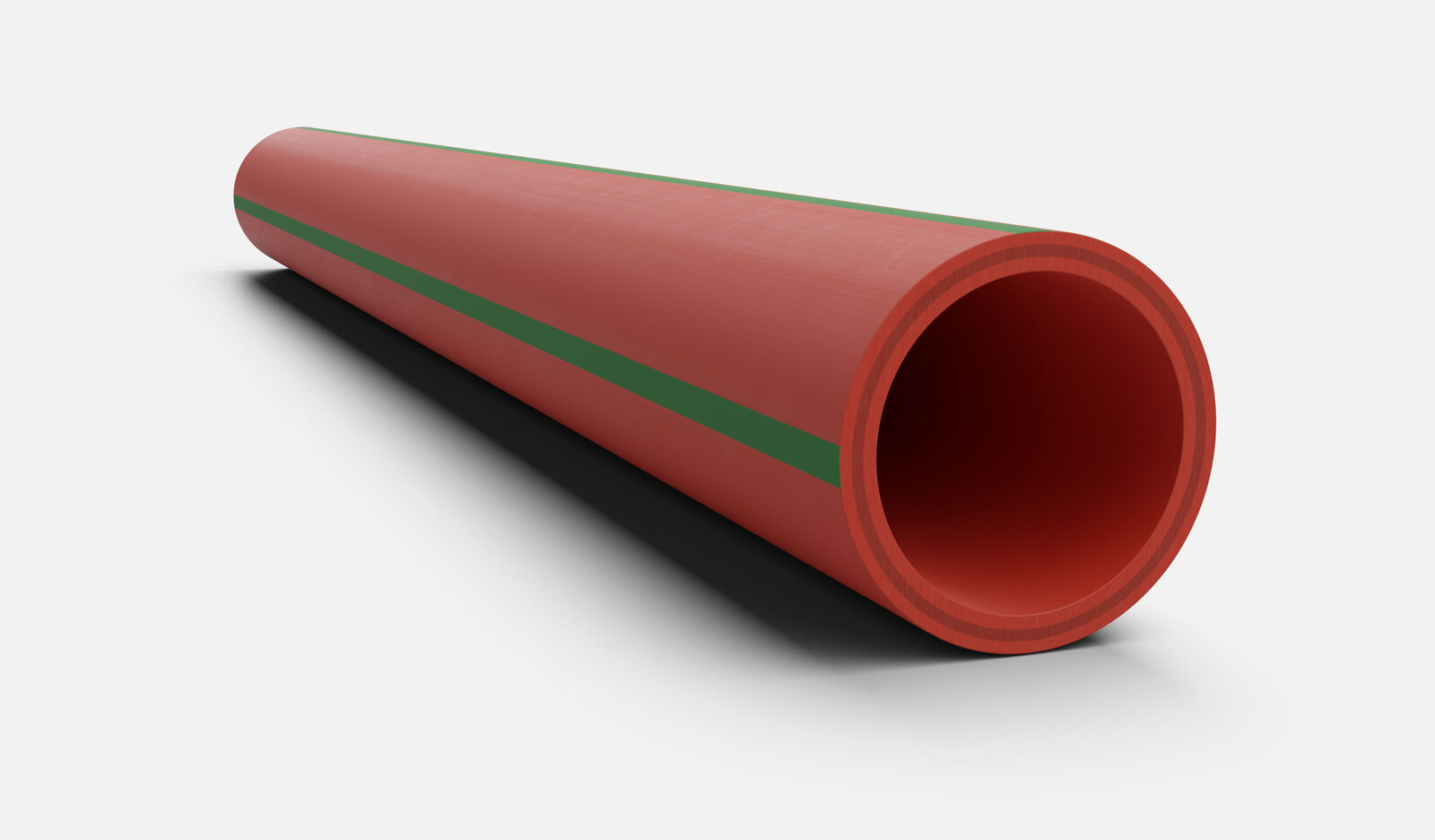
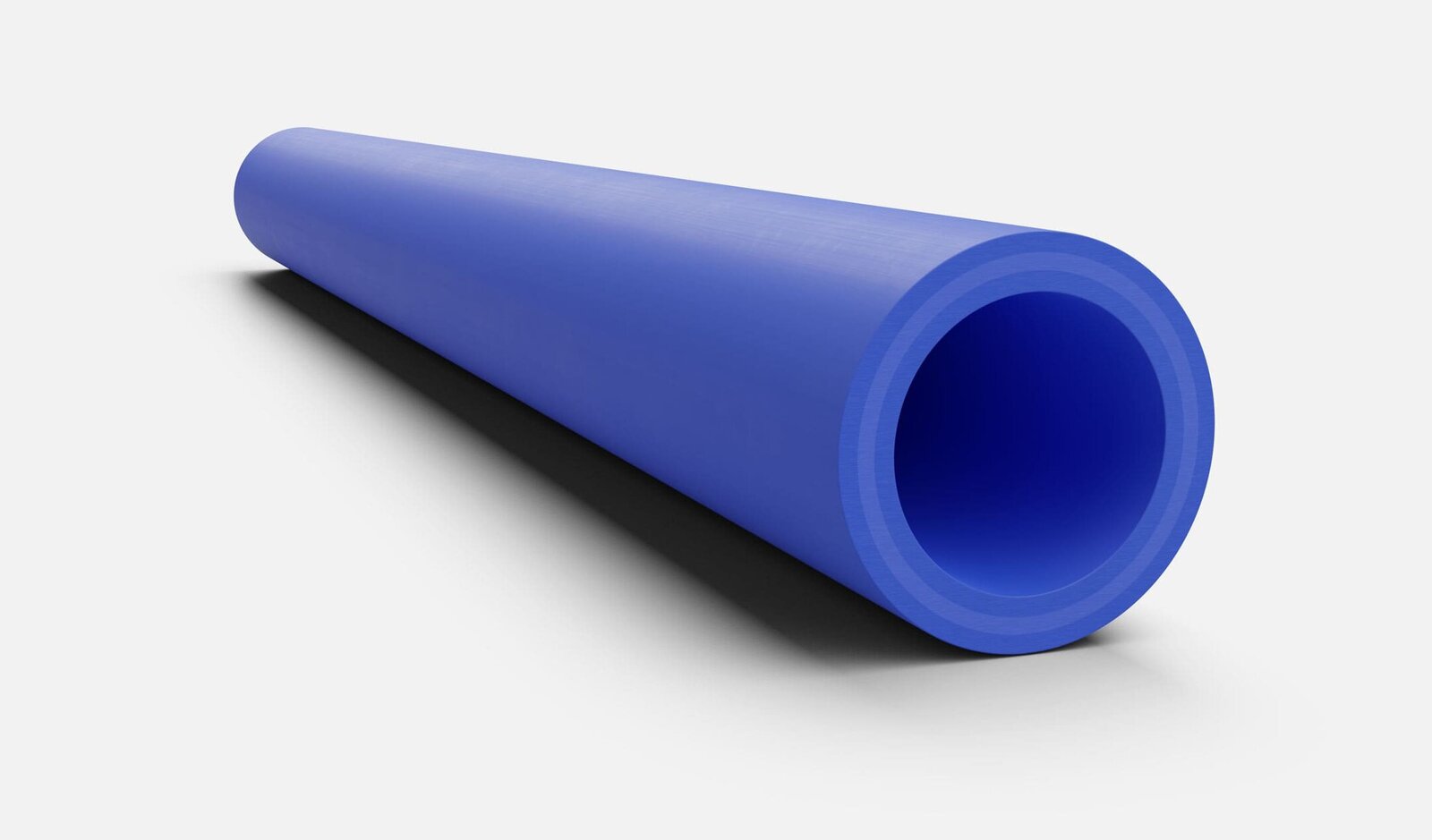
aquatherm black is manufactured exclusively from fusiolen® PP-R. This material offers high temperature and pressure resistance, excellent welding properties and corrosion resistance. Continuous temperatures of 60 °C are possible; in practice, significantly lower flow temperatures are used.


Frequently asked questions about AQUATHERM BLACK
The aquatherm black grids distribute heat or cooling evenly across the entire active surface. Water acts as the transfer medium. As heat and cooling are primarily transferred by radiation and no high air velocities are required, there are no draught-related issues.
In heating mode, the grids typically operate at flow temperatures ranging from approximately 25 to 35 °C, which is significantly lower than that of conventional systems. This makes them well-suited for use in combination with heat pumps and other low-temperature heat generators. In cooling mode, flow temperatures are maintained above the dew point to prevent condensation.
The aquatherm black heating and cooling grids are suitable for residential buildings, office and administrative buildings, public facilities and commercial properties – in both new builds and refurbishments. The low installation height and modular system design allow installation even in confined spaces and, depending on the construction schedule, even while the building is in use or occupied.
aquatherm black can be integrated into various plasterboard and drywall constructions. The system is suitable for, amongst other things:
- Drywall constructions with metal or timber substructures
- Suspended ceiling systems with plasterboard or mineral fibre panels
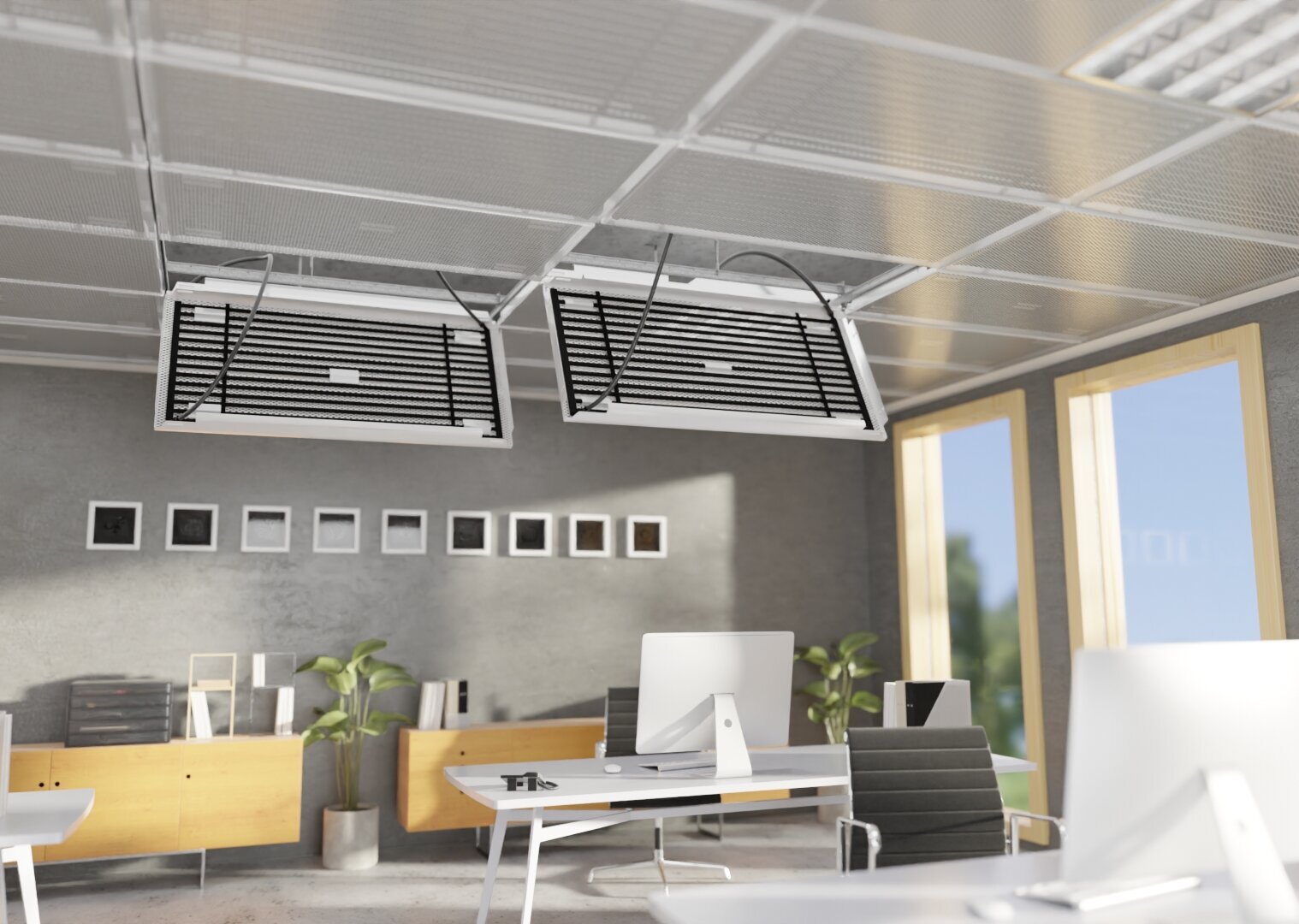
- Metal coffered ceilings and similar grid or coffered systems
- Thermally activated ceiling sails for specific architectural or acoustic requirements
In all variants, installation is flush-mounted or concealed, allowing the heating and cooling ceilings to be integrated into the room architecture in a largely invisible manner.
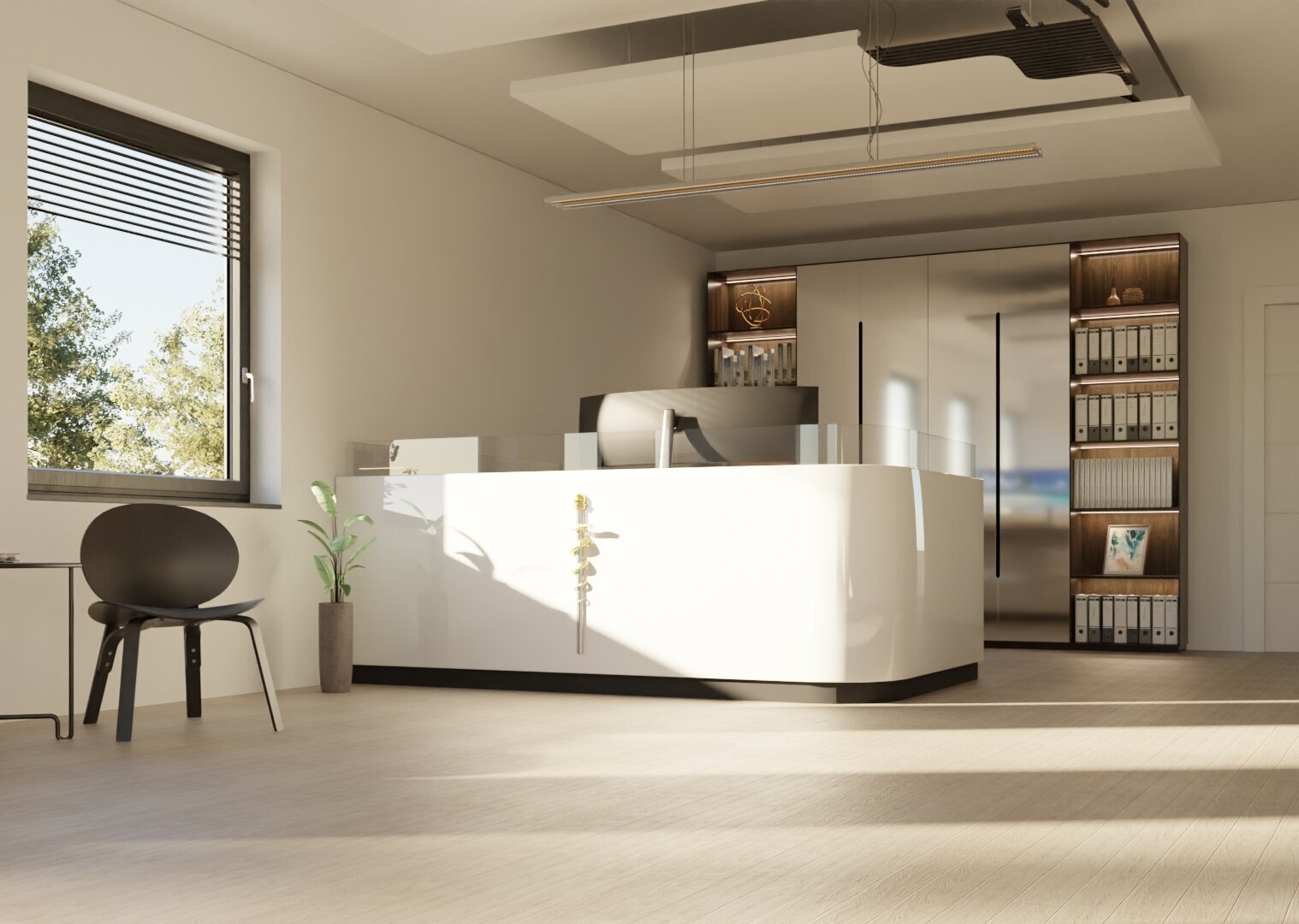
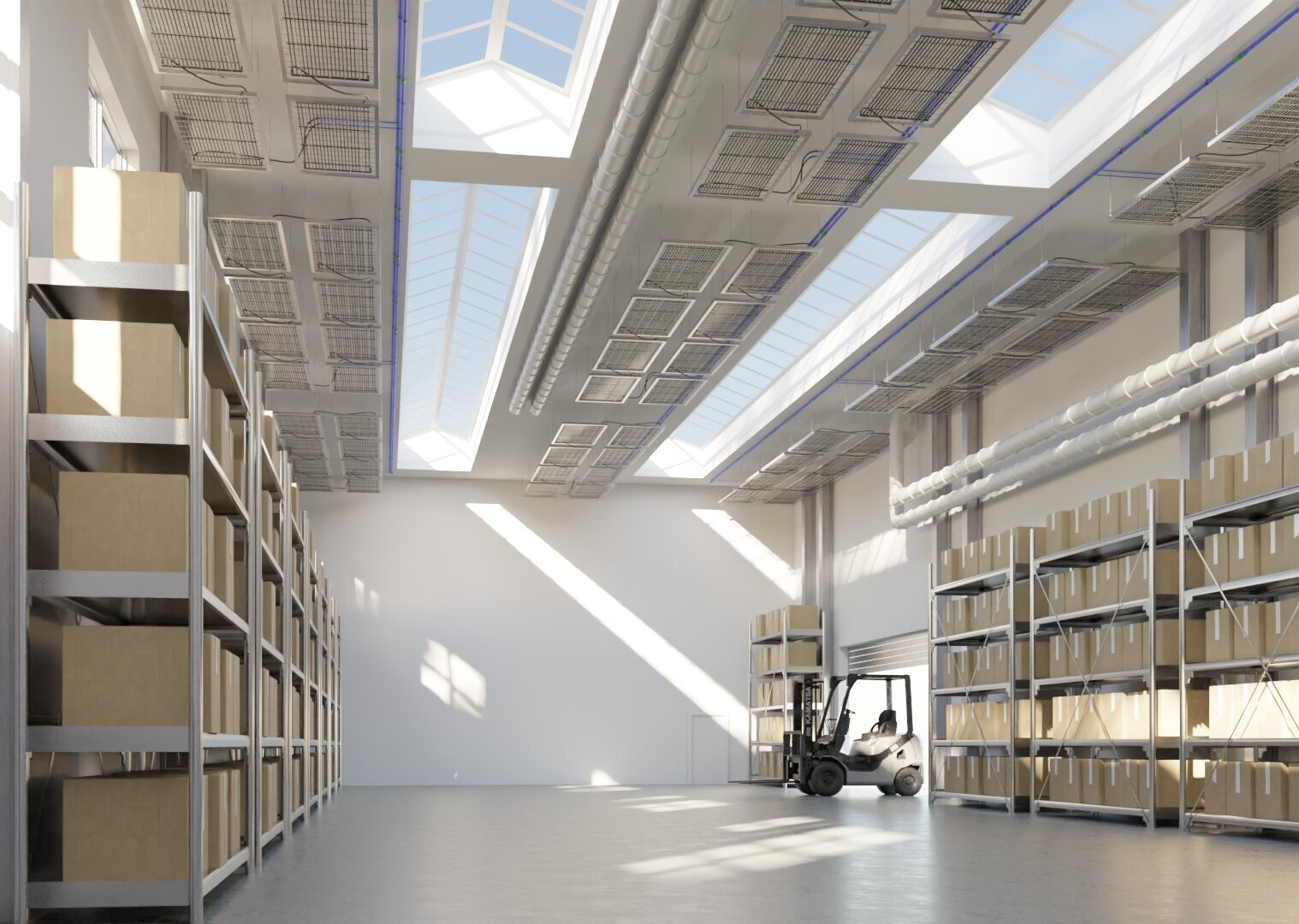
Heating and cooling sails are particularly suitable where full-surface ceiling cladding is undesirable or structurally impossible – for example, in office and administrative buildings, public facilities or open-plan layouts with exposed ceiling and building services.
Thermally activated ceiling sails from aquatherm black combine radiant heat and cooling with free convection: heat or cooling is transferred primarily via radiation from the sail surface, supplemented by natural air movement along the sail’s surface.
Another advantage: ceiling sails can be purchased flexibly from the market. With aquatherm black registers, almost any suitable sail system can be thermally activated, allowing architectural, acoustic and technical requirements to be combined regardless of the manufacturer.
The design of heating and cooling ceilings with aquatherm black is essentially based on the heating or cooling load, the construction method (e.g. plaster, drywall, ceiling sails), and the type and temperature levels of the heat or cooling generator used (e.g. heat pump, district heating, chiller).
aquatherm supports building services engineers and contractors through aquatherm services with individual planning advice – from system selection and sizing through to detailed questions regarding installation.
Articles you might find interesting