
In modern heating system installation, safety, durability and efficient on-site installation are key. Whether connecting heat generators, constructing heating centres or distributing heating water across different heating circuits, metallic materials can reach their limits when faced with fluctuating water quality and high demands for corrosion protection.
A suitable pipework system for heating system installation must therefore be durable, corrosion-resistant and easy to install. Plastic pipes offer a high-performance alternative for heating systems. They reduce weight during installation, enable permanently leak-proof pipework networks, and can be used efficiently in new builds, refurbishments and commercial construction projects.
Pipe systems in heating system installation: solutions for typical applications
Depending on the project, the requirements for pipework routing, sizing and integration vary significantly. This is why pipework systems are used in a wide variety of areas within heating system installation – from heat generation to heat distribution within the building.
- Connection of heat generators: Modern heat generators such as heat pumps, buffer tanks or central boilers require pipework that is reliably connected to the overall system and efficiently supports heat distribution.
- Boiler rooms and manifold installation: In plant rooms, pumps, storage tanks, manifolds and larger pipe diameters are all present. Consequently, the pipework system, sizing and routing must be tailored to the specific system configuration.
- Riser zones and horizontal runs: For longer pipework runs within a building, the route, fixing, thermal linear expansion and accessibility must be taken into account at the planning stage.
- Radiators, underfloor and surface heating: A plastic pipe for heating can supply various heat emission systems. This makes suitable for traditional radiator systems as well as for surface heating in residential and commercial buildings.
- Renovation of existing buildings and mixed installations: When modernising existing systems, lightweight, corrosion-resistant pipework simplifies installation and connection to existing heating networks.
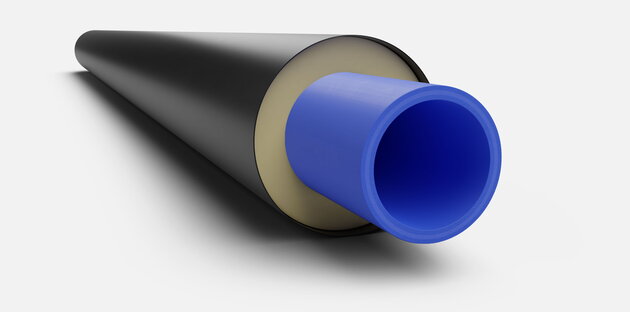
- Underground pipework: Where pipes are routed outside the building – for example, to connect to outdoor heat pumps or separate parts of the building – a plastic pipe specifically designed for heating and installation in the ground can be a suitable solution.
Plastic pipes for heating are not limited to a single type of building or a specific heating system. They are suitable wherever heating pipes are required for heat generation, distribution or heat transfer in new builds, existing buildings or outdoor areas.
Requirements for a pipework system in heating system installation
Before selecting a pipework system, designers, specialist heating, ventilation and air-conditioning (HVAC) contractors and building services managers must assess the general conditions of the heating system. These include the heat generator, temperature range, pressure conditions, building type, pipework routing and the subsequent mode of operation.
Key selection criteria include safe sizing, hydraulically controllable pressure losses, permanently leak-proof joints and suitability for different heating circuits. A plastic pipe for heating should also be corrosion-resistant and cost-effective to install – both in new builds and when refurbishing existing systems.
The quality of the heating water is also relevant: if metallic components such as pumps, valves or heat exchangers are involved, an oxygen-impermeable plastic pipe for the heating system may be required. Similarly, sound insulation, fire safety and building regulations must be taken into account to ensure that the pipework system is technically, compliant with relevant standards, and structurally suitable for the project.


Heating system installation with plastic pipes: planning, laying and integration
When planning and installing plastic pipes in heating system construction, the pipe routing, building structure and installation process must all work together. It is crucial that heating pipes can be routed safely through plant rooms, shafts, wall and ceiling penetrations, and outdoor areas. The following points are particularly relevant during installation:
- Building layout: Pipe routes should be coordinated with ventilation, plumbing, electrical systems, insulation and fire protection to ensure there is sufficient space for installation, insulation and future access.
- Penetrations and fire protection: For wall and ceiling penetrations, the structural requirements must be clarified, particularly where pipes pass through fire compartments or areas requiring special protection.
- Fixing and movement compensation: For longer runs, brackets, fixed points, sliding points and expansion provisions must be planned in such a way that temperature-induced movements are absorbed in a controlled manner.
- Existing connections: During refurbishments, it is necessary to check where new pipes are to be connected to existing heating networks, fittings or metallic components.
- Outdoor and underground installation: If a plastic pipe for the heating system is laid underground, the route, mechanical protection, insulation, laying depth and building entry point must all be coordinated.
It is therefore essential for project planning that pipe routes, fixing points and transitions are coordinated during project planning. This allows the installation to be prepared in a practical manner – from the plant room to the building entry point.
Technical properties and system components for heating
In heating system installation, a pipework system should be considered as a complete installation: from the routing of the medium through to pressure and temperature resistance, and right through to the installation process. Depending on the application, factors such as linear expansion, connection reliability and the appropriate design for indoor, outdoor or distribution pipework also play a role.
The system components fulfil different functions. Straight pipe runs carry the heating water over longer distances, whilst fittings enable changes of direction, branches and changes in diameter. Manifolds integrate multiple heating circuits, whilst adaptors provide connections to valves, heat generators or existing pipework.
Connection technology is vital for the professional installation of the pipework. It determines how pipes, fittings and adaptors are prepared, joined and tested. Key factors here include the on-site installation conditions, the accessibility of the connection points and the secure execution of connections to valves, heat generators or existing pipes.



Frequently asked questions about heating system installation using aquatherm pipe systems
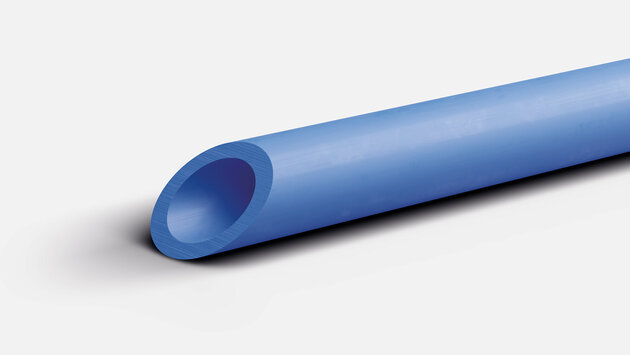
Plastic pipes can be used in heating system installation for a variety of systems, for example for heat pumps, radiator systems, underfloor and surface heating, as well as other heating systems in both new-build and existing properties.
The pipework system should be suitable for the specific application and tailored to the temperature range, pressure conditions, dimensions and route of the pipework. Secure connections and a reliable connection to heat generators, manifolds and heating circuits are also important.
If the system contains metallic components such as pumps, valves or heat exchangers, oxygen ingress can accelerate corrosion. An oxygen-tight plastic pipe can therefore be an important selection criterion for heating systems.
Yes, provided the solution used is designed for this type of installation. Installation underground may be relevant, for example, when heating pipes are routed outside the building or when connecting outdoor heat pumps and separate parts of the building.
A plastic pipework system for heating is suitable for a range of requirements in heating system installation, such as in residential buildings, commercial properties, industrial applications or refurbishment projects. The key factor is that the design, sizing and connection points are appropriate for the specific project.
A plastic piping system for heating is suitable for a variety of requirements in heating system installation, such as in residential buildings, commercial properties, industrial applications, or renovation projects. It is crucial that the design, sizing, and connection points are appropriate for the specific project.