Prefabricated main distribution manifolds made from aquatherm blue in the “New Soest North”
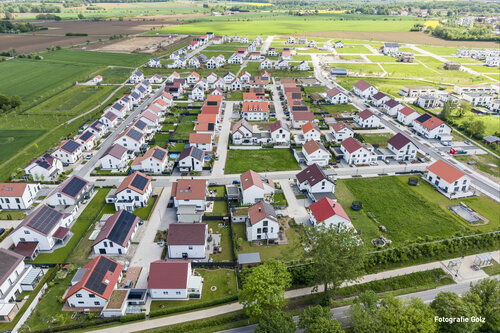
With the "New Soest of North", the largest new development area in the city of Soest (Germany) is currently under construction. Around 600 residential units – detached, semi-detached, and terraced houses – are being built across an area of around 35 hectares, some of which have already been completed.
A special feature of the new Soest district is its innovative heat supply system, which focuses on a cold local heating network – currently one of the largest of its kind in Germany.
With the "New Soest of North", the city of Soest is moving a step closer to its goal of climate neutrality. Measures such as green roofs, high energy-efficient building standards and photovoltaics are intended to support to climate protection. The cold local heating network further enhances the development’s role as a showcase residential quarter.
What is cold local heating?
A local heating network supplies several buildings with centrally generated heat and hot water via a closed pipe network. In contrast to conventional district heating, the distances are significantly shorter – typically less than two kilometres – resulting in lower heat and energy losses.
Cold local heating refers to heating networks that supply buildings with energy from sources such as geothermal energy, wastewater or solar thermal energy at a low temperature level.
This technology has been implemented in the new development area "New North of Soest". The network’s ground collectors are installed at depths of between 1.5 and 3 metres, where they absorb geothermal heat. This heat is then transported to the individual buildings via pipelines. Within the buildings, heat pumps raise the temperature to a level suitable for heating and hot water.
Prefabricated large-scale manifolds
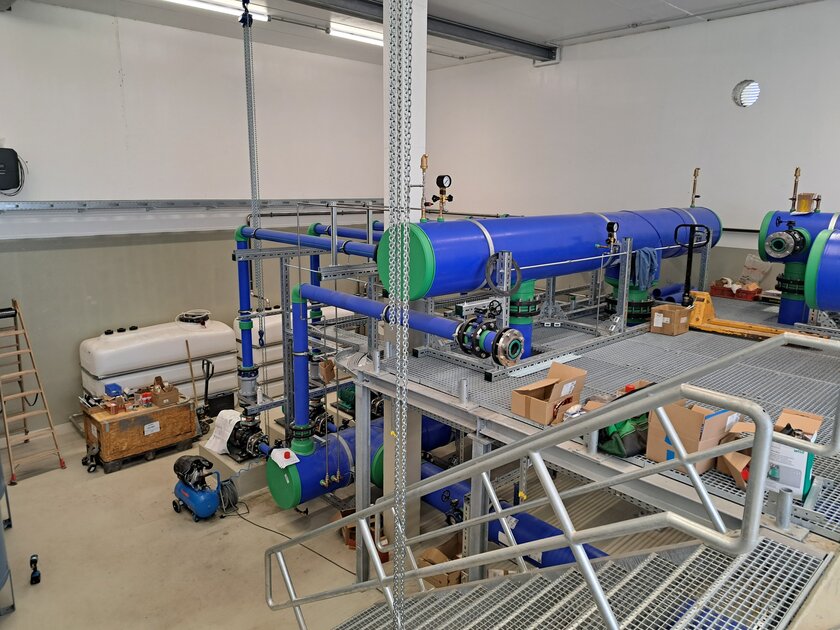
At the heart of the local heating network is the technical centre, where heat distribution and control converge centrally. Here, Stadtwerke Soest, the energy supplier for the development, together with the city of Soest, opted to use aquatherm blue.
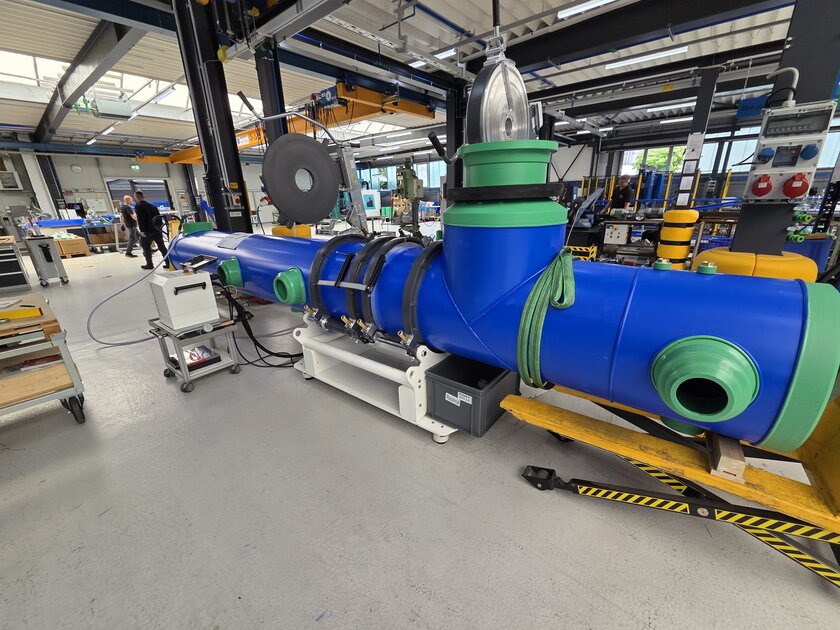
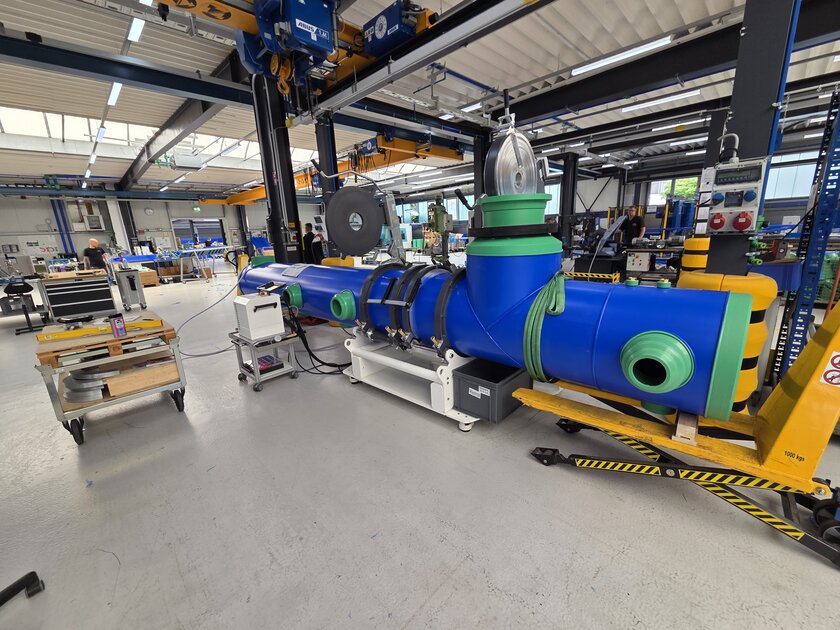
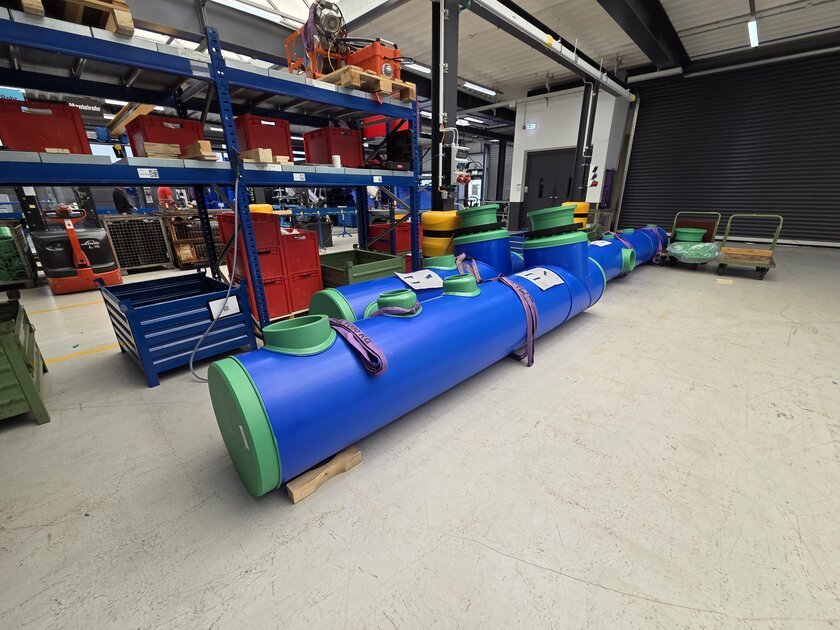
Using the aquatherm blue piping system, aquatherm was able to prefabricate large manifolds and headers as bespoke components. In the technical centre of the "New North of Soest", pipe diameters ranging from 125 to 630 mm are used – a challenge that required precise planning, a high level of manufacturing expertise and close coordination between all parties involved.
For the project, a total of four large manifolds and other bespoke components were manufactured from aquatherm blue, each precisely tailored to the installation conditions within the technical centre. The units reach lengths of up to 6 m and weigh as much as 570 kg, with the most complex assemblies comprising up to 50 welds.
Thanks to prefabrication at aquatherm’s headquarters in Attendorn, the welding work could be carried out under controlled conditions, independent of the weather, ensuring high process reliability and fully documented quality. As a result, on-site work was largely limited to the installation of the manifolds.
Time pressure due to approaching heating season
Ulrich Hermes, project manager of the installation company Henke GmbH from Anröchte, which is involved in the project, reports that his team has had "very good experience with processing pipelines in dimensions of up to 630 mm" – despite the significant time pressure on the project. This is because the technical centre, and therefore the cold local heating network, had to be completed in time for the heating season.
Ulrich Hermes emphasises that they particularly benefited "from the fast planning and short prefabrication times provided by aquatherm". The planned completion time for the plant was around 50 working days – an ambitious timeframe that could only be achieved through prefabrication and the tailored delivery of the assemblies.